
Olana Energy didn't begin as an energy storage company. In 2023, the company was founded under the name Biosolar. Company focused on developing Agrisolar projects on farmland. Agrisolar means building solar power plants in a way that enables farming, and takes into consideration the local ecosystem. At the time, the development pipeline included over 700 MW of solar projects alongside roughly 60 MW of planned BESS capacity, spread across Southern Finland from Turku to Kouvola.
The thesis was straightforward: renewables were growing, grid flexibility would be needed, and Finland was well-positioned to attract capital. The team was small and founder Ville Kaituri's background was not in energy but in real estate and entrepreneurship. What the team lacked in sector experience, it compensated for speed.
Through 2023 and early 2024, it became clear that the Finnish solar boom turned out to be over estimated – to everyone’s surprise building solar in Finland turned out to be challenging. But battery energy storage offered something that solar did not: a faster route to revenue, a more predictable construction path, and a market that was significantly undersupplied relative to demand.
Solar development was stopped. The company refocused entirely on standalone BESS, renamed itself Olana Energy, and restructured around a single goal: build operational battery assets, fast.
The strategy was deliberately mid-scale. Rather than targeting 100 MW projects requiring lengthy permitting and transmission-level grid connections, Olana identified 5–10 MW sites connectable to local distribution networks in a matter of months. The trade-off was smaller individual projects; the advantage was speed-to-revenue and a lower barrier to first commissioning.
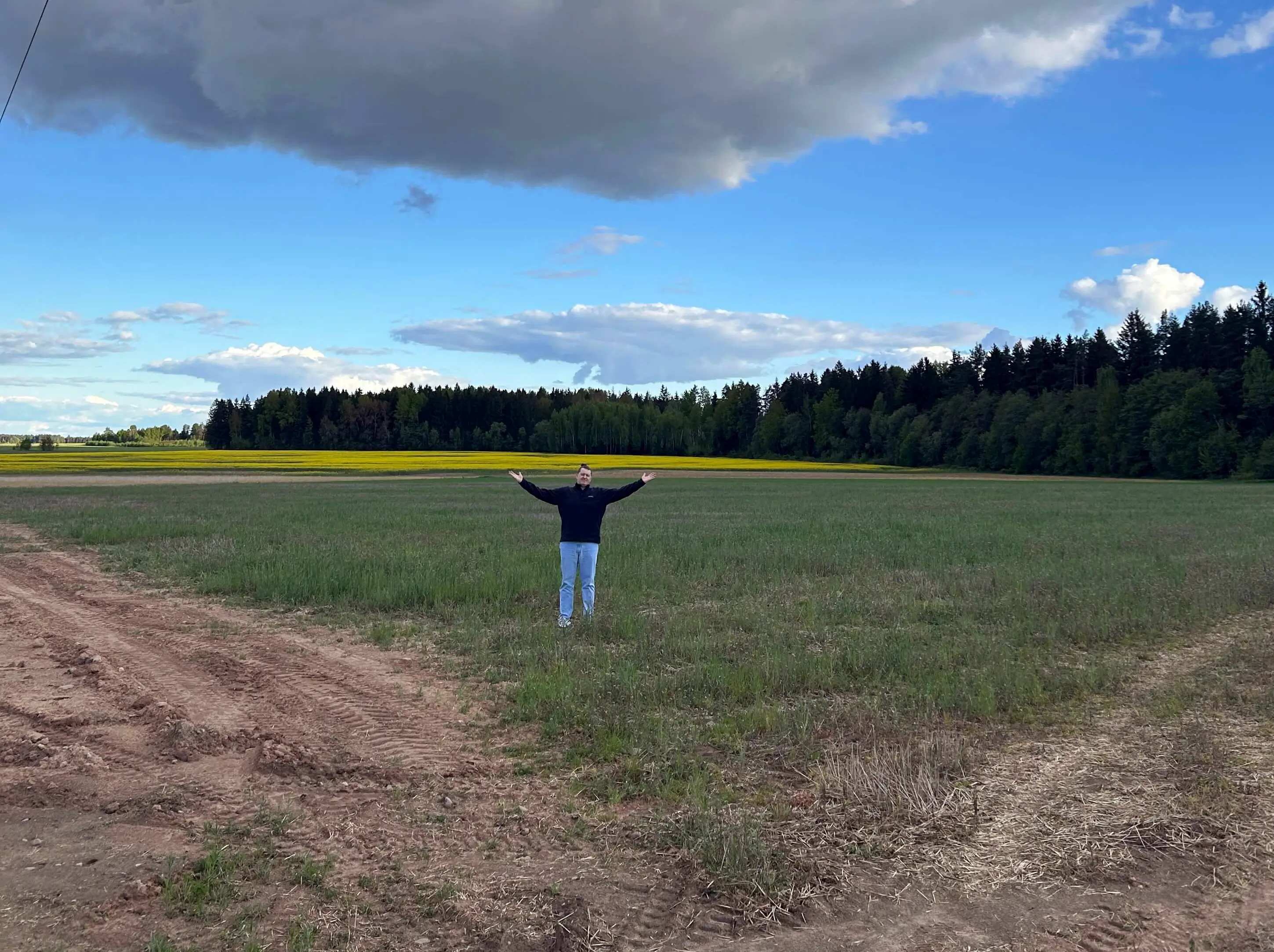
The first project Turku was in some ways an unconventional choice for a flagship asset. At 5 MW / 6 MWh, it was the smallest in the portfolio. The site, a 773 m² leased plot, sat on land owned by Ville Kaituri's family, roughly 200 metres from where he grew up.
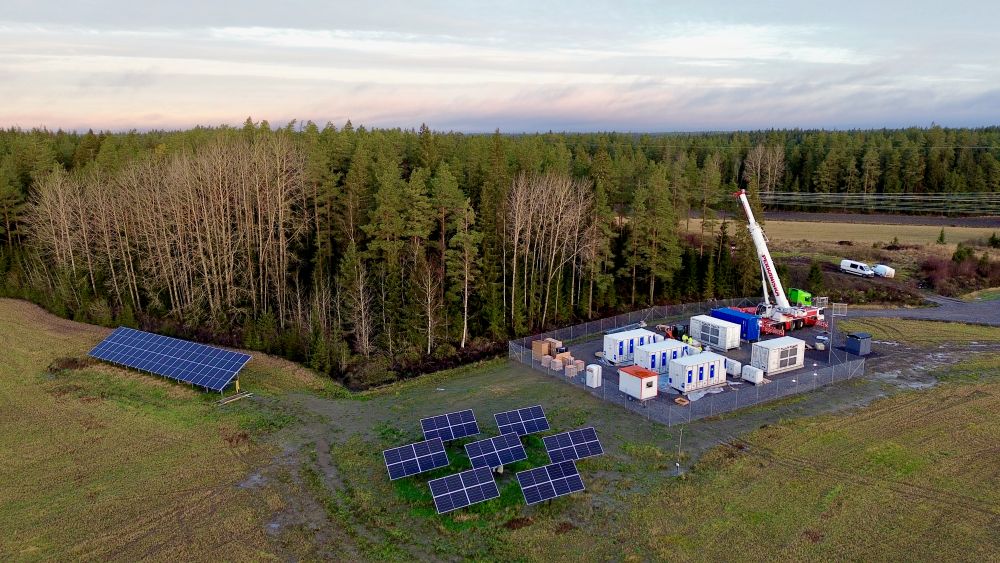
Construction began in summer 2024. The BESS system, three Huawei battery containers connected to Caruna's 20 kV distribution network, was installed, commissioned, and connected to the Finnish reserve markets through Capalo AI's aggregation platform. The building permit had been granted in March 2024; the grid connection agreement was signed in August. By December 2024, Turku was operational.
It was the first grid-scale battery storage asset Olana had ever commissioned. Real-time revenue data began flowing in January 2025.
Twelve months later, Turku is one of three operational Phase 1 assets. Siilinjärvi (10 MW) and Selkiö (10 MW) came online in early 2025, completing the Phase 1 portfolio of 25 MW / 30 MWh. The company has since grown its operational fleet significantly, with 117 MW of additional projects under construction in Finland and Lithuania.
Turku demonstrated that the model worked. Construction timelines were achievable. Capalo AI's trading algorithms performed across FCR-N, FCR-D, FFR, aFRR, and mFRR markets simultaneously. The economics were real, not projected.
Olana is now developing a pipeline that extends well beyond Finland. The core team remains small by design, operational excellence, not headcount, is how the company scales. But as the portfolio grows, so does the need for new skillsets.
If building something from scratch in a fast-moving industry sounds like your kind of challenge, we'd like to talk.
We believe in long-term partnerships, but also cherish new beginnings.